
Repairing your teeth
What is a collapsed bite and when might teeth need repairing?
The phrase ‘collapsed bite’ should not, on its own, decide whether extensive reconstruction is needed.
Talk through your options for repairing teeth
If you would like to understand how a tooth might be repaired or protected, a £30 consultation offers time to discuss your concerns and what an individual assessment may involve.
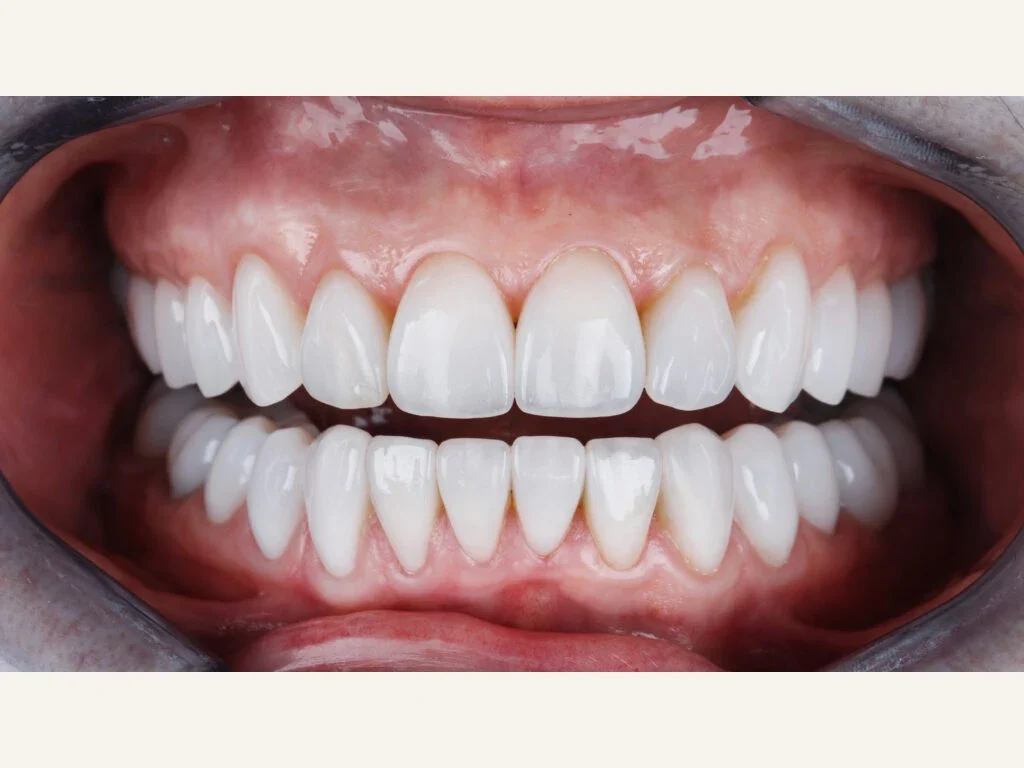
“Collapsed bite” needs an explanation of the actual findings
A collapsed bite is a description that needs explaining, rather than a diagnosis that automatically calls for extensive reconstruction. Your dentist should show you the tooth loss, wear, movement or restoration problem involved and how it affects function. The recommended treatment needs to address those findings.
Wear and periodontal breakdown need different assessments
Where tooth wear is involved, chemical and mechanical contributors and progression need consideration. Where advanced gum disease has affected function, stage-IV periodontal guidance addresses coordinated rehabilitation after appropriate disease management. That guideline concerns advanced periodontal cases; it should not be used to classify every short-looking tooth or every perceived facial-ageing concern as the same disease. [1][2]
Ask which part of function needs restoring
Describe chewing difficulties, damaged restorations or a changed bite and ask how these will be assessed. Clarify which teeth or spaces contribute to the proposed problem and why each treatment stage is recommended. If appearance is also a goal, distinguish that preference from the functional indication, so you can compare the benefits and extent of the intervention.
A planned new contact pattern needs review points
If the proposal changes tooth height or the way teeth meet, ask how the intended result will be evaluated and what decisions depend on provisional stages. The plan should identify the endpoint, foreseeable problems and what could change the recommendation. It should not imply that a more extensive alteration is automatically a more complete or better treatment.
Jaw pain needs its own diagnostic reasoning
A promise to cure jaw pain or headaches by rebuilding the bite requires evidence for that particular diagnosis and intervention. A chronic-TMD guideline addresses pain lasting at least three months and recommends management within that scope. It is not proof that restorative bite change cures every painful jaw condition. Ask which symptom outcome is supported and which remains uncertain. [3]
Compare the whole plan before irreversible treatment
Request the essential disease-control treatment, proposed restorations, reasonable alternatives, maintenance and total estimated fees. Ask what can be treated locally and what justifies intervention across more teeth. A coordinated full-mouth plan can be appropriate for complex disease, but it still needs tooth-by-tooth reasoning and informed consent rather than an anti-ageing or guaranteed pain-relief promise. [2]
Understanding vertical dimension
The distance between the jaws when the teeth meet can be altered during more extensive rehabilitation, but doing so requires justification and assessment. A patient with worn teeth does not automatically have a collapsed bite. Tooth eruption and compensatory changes can preserve vertical relationships despite wear. Increasing restorative height everywhere merely because teeth look short may produce a difficult adaptation period or unnecessary preparation.
Compare the complete burden before deciding
Request the stages, practical restrictions, important risks, temporary arrangements where relevant and maintenance plan. At Iconic Smiles, ask who coordinates care and request itemised fees for the actual proposal. Explain your priorities around function, appearance, intervention and ongoing appointments. A decision should remain open to reassessment if the findings change. It should not depend on an arbitrary treatment deadline, a guaranteed lifespan or pressure to accept the most extensive plan as proof of quality. The aim is a proportionate response whose benefits and continuing commitments you understand, whether that means monitoring or active reconstruction. Meet the Iconic Smiles dental team · See our current treatment fees
The sequence from records to treatment
The team may need to diagnose symptoms, inspect the existing restoration, remove unsound material, assess whether the biting points need covering, then fit the restoration and check its contacts.
Checking the remaining enamel and old restorations
Where much of the original enamel has already been replaced by filling material, a veneer may be bonded partly to resin rather than natural enamel. The clinician should inspect the quality of that substrate and the extent of existing cracks or leakage. A patient with extensive wear or heavy bite forces may need an alternative design. The presence of old composite does not mandate removal, but it should be explicitly included in the consent and maintenance discussion.
Understand the scope of additive composite
Direct composite can sometimes restore lost form without following the same preparation route as a full crown. A systematic review of selected localised anterior wear cases supports a short- to medium-term role, while reporting substantial variation and a need to consider maintenance. It is not proof that every severely worn mouth can be rebuilt by the same technique or kept indefinitely without repairs. Ask which teeth and objectives the proposed composite approach addresses, what compromise is expected and how chipping or wear would be managed. A conservative option deserves balanced expectations, not a promise that less intervention means no future treatment. Read the supporting clinical study (2)
Connect prevention and necessary health treatment
Where a contributing process is identified, clarify the appropriate advice, management and review before or alongside reconstruction. Government guidance describes chemical and mechanical influences and the role of risk-factor assessment. Restoring visible form does not automatically remove them. If disease, a fracture concern or another health question needs attention, ask how it affects readiness and sequence. Preparation should answer a clinical question rather than be a set number of visits leading automatically to clearance. The patient needs to understand who coordinates relevant care and which finding could change the proposed next intervention. Supporting source (www.gov.uk)Read the supporting clinical study (2)
Finish with one understandable care plan
The handover should explain the achieved result, any accepted limitation, appliance care and review of the restorations. Ask how chipping, a changed bite, discomfort or a fit problem will be assessed and which service to contact. At Iconic Smiles, confirm the clinicians, locations and itemised fees across both parts of the pathway. A good combined sequence remains responsive to the findings at each stage. It should not lock you into irreversible preparation before reassessment or suggest that correcting the bite guarantees lifelong veneers without repairs, retention needs or further professional care. Meet the Iconic Smiles dental team · Find an Iconic Smiles practice · See our current treatment feesSupporting source (bos.org.uk)
Distinguishing acid erosion from mechanical wear
A nightguard may be appropriate when mechanical tooth wear or grinding poses a significant risk, but it does not correct the repeated exposure to acid that causes erosion. The pattern and location of damage can help the dentist identify likely contributors. If a patient sips acidic drinks all day, changing the timing and frequency may be more relevant than purchasing restorative material. An effective makeover plan deals with ongoing disease or wear before trying to conceal its consequences.
Agree when active treatment is ready to finish
Completion should involve an assessment against the agreed goal, not merely the end of a box of appliances or a predicted calendar date. Ask what has been achieved, whether any compromise remains and what further options exist if you are concerned. The explanation should distinguish a refinement of the plan from a different treatment objective. Informed consent remains relevant if the recommendation changes. Do not assume that every additional stage is automatically needed or automatically avoidable; request the clinical reason, expected benefit and practical implications so the decision reflects the current findings.
Understand the cost of irreversible choices
Extraction removes a tooth, and preparing a tooth for a restoration changes it. The reason for each proposed intervention should be explicit, particularly when some teeth might be retained or treated more conservatively. Consent requires discussion of benefits, important risks and realistic alternatives. Ask whether the proposed change is necessary for disease management, structural reasons or an elective appearance goal. That distinction helps you weigh the intervention against other options. A large combined plan should not make individual decisions disappear behind a package name or imply that a more extensive procedure is automatically the most durable or appropriate choice.
Report a chip, changed contact or altered bite
Contact the treating service if a restoration chips, develops a rough edge, feels different or the bite changes unexpectedly. A review is needed to identify the affected structure and discuss the response. Ceramic-veneer research reports complications as well as survival across varied studies; it does not provide a guaranteed repair method or lifespan for every patient. Do not use household adhesive, file a restoration or repeatedly test it by biting harder. Describe what happened, when it began and whether there is pain or difficulty eating, so the team can advise on the appropriate assessment. Read the supporting clinical study (2)
Plan the restoration before choosing implant positions
The intended teeth and bite help determine what implant support is required. NHS information describes implants supporting different restorations, while full-arch consensus considers prosthetic design and available clinical conditions together. Ask how the proposed positions relate to the final crowns or bridge, cleaning access and any retained teeth. Starting with a fixture count alone can conceal the actual restorative objective. If the proposal changes the way the teeth meet, request an explanation of the clinical reasoning, alternatives and how the intended arrangement will be assessed before accepting the definitive reconstruction. NHS patient informationRead the supporting clinical study (2)
Continue care for teeth and supporting tissues
Orthodontic correction does not eliminate the need for dental check-ups or assessment of new symptoms. Ask how to clean around any fixed retainer and what to do about persistent bleeding, soreness or food trapping. NHS braces guidance emphasises cleaning and regular dental care. If pain develops, describe it rather than assume it is necessarily caused by the old open bite or solved by restarting an appliance. Suspected infection needs urgent dental advice; serious symptoms such as difficulty breathing or swallowing, major mouth swelling or eye involvement require emergency care under NHS abscess guidance. NHS patient informationNHS patient information
Coordinate the implant and restorative appointments
Implant placement, healing and connection of a restoration are separate stages, even when some are combined in selected patients. The ITI distinguishes placement and loading protocols and recommends planning alternatives if the preferred conditions are not met. Ask how retained teeth and temporary replacements are managed while the implant stages proceed. A patient should know which teeth or appliances are being used at each point, who supplies them and what changes would affect timing or cost. This is especially relevant when several clinicians contribute to the same mouth rather than completing independent treatments. Supporting source (academy.iti.org)
Research and guidance
Your next step, when you’re ready
We would be pleased to welcome you for a £30 consultation at your preferred Iconic Smiles practice. Bring your questions, and we can talk through the options that may suit you.
Any additional investigations and their fees will be explained before you decide.