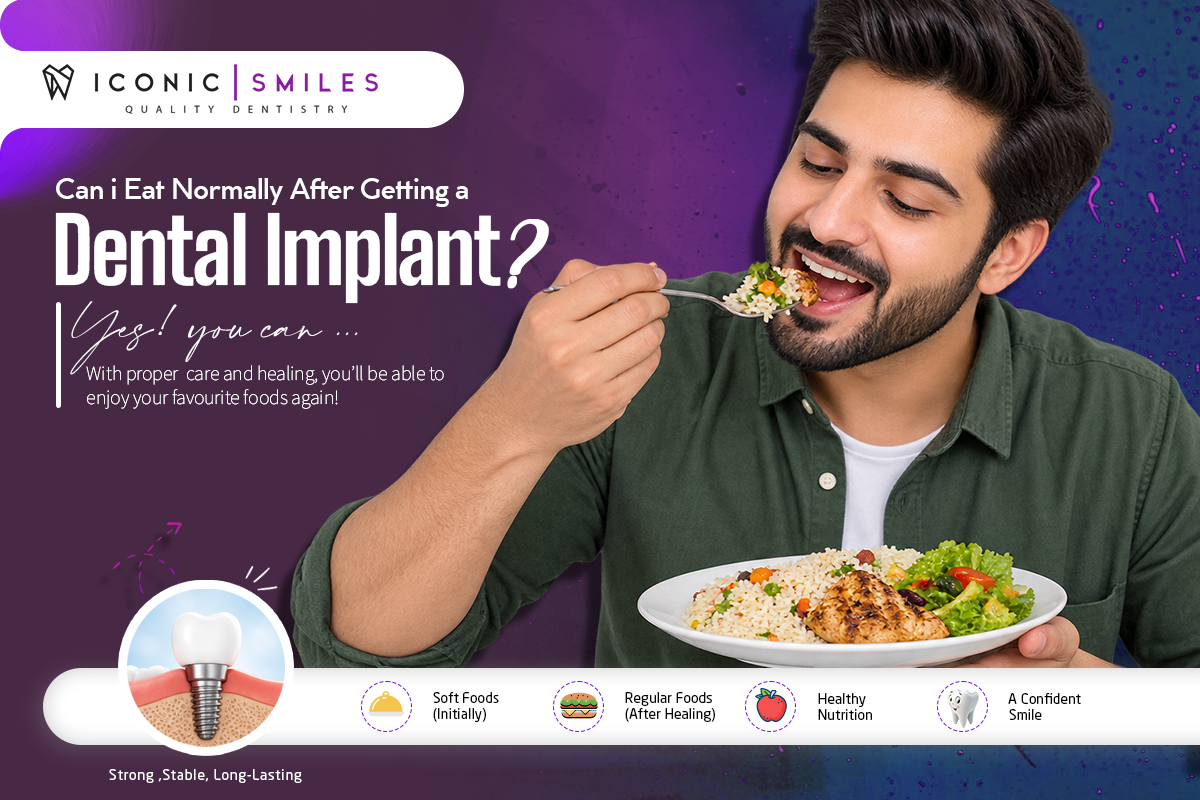
You can usually eat after dental implant surgery, but do not rush to chew while your mouth is still numb. What you eat afterwards depends on the surgery you have had. After a straightforward implant, some patients manage fairly normally; others are more comfortable with soft foods for a few days. Bone grafting, several implants or an immediate temporary tooth can change the advice.
Your implant surgeon’s instructions take priority because they know how stable the implant was at placement and whether the site needs protecting from chewing pressure.
When can I eat after implant surgery?
Wait until the local anaesthetic has worn off enough for you to eat safely. While the lip, cheek or tongue is numb, it is easy to bite yourself or burn your mouth without realising.
For the first day or two, many people find softer, cooler foods easier. NHS oral-surgery guidance also advises avoiding very hot food and drinks in the early period because they can encourage bleeding.
What can I eat on the first day?
Choose food that is easy to manage and does not require heavy chewing near the surgical site. You do not need a complicated ‘implant diet’. Useful options include:
- scrambled eggs or omelette
- yoghurt
- mashed potato
- soft pasta
- soft cooked vegetables
- flaky fish
- porridge once it has cooled
- smooth soups once they are no longer hot
- banana, avocado or other soft fruit
If your surgeon has given you more specific instructions, follow those instead.
Do I need to stay on soft food for weeks?
Not necessarily. There is no single timetable that applies to every implant. Some NHS implant services advise that patients can eat normally after treatment, while also noting that a soft diet may be recommended. In practice, the sensible approach is to let comfort and the surgical plan guide you.
If the implant has been immediately restored with a temporary crown or bridge, or you have had grafting or multiple implants, you may be told not to load that area for longer. That is a case-specific instruction, not a universal rule.
What should I avoid at first?
In the early healing period, avoid anything that is likely to traumatise the wound or put unnecessary force through a temporary restoration.
- Very hot food and drinks immediately after surgery.
- Hard or very crunchy foods directly over the treated area while it is sore.
- Sticky foods if they could pull on a temporary crown, bridge or denture.
- Alcohol for at least the period advised by your surgeon; NHS implant guidance commonly advises avoiding it for 24 hours.
- Chewing while the mouth is still numb.
Can I chew on the implant side?
Immediately after surgery, it is usually more comfortable to use the other side. Whether you need to avoid direct chewing for longer depends on the implant and restoration. An implant left to heal under the gum is different from one carrying an immediate temporary tooth.
Do not ‘test’ the implant by deliberately biting hard food on it. Follow the loading advice you were given.
When can I return to a normal diet?
As soreness settles, most patients can broaden their diet progressively. The wound in the gum heals much sooner than the implant finishes integrating with the jawbone, so feeling comfortable does not necessarily mean the implant is ready for unrestricted loading.
Osseointegration takes place over a period of months. Guy’s and St Thomas’ notes that implants commonly wait at least three months before supporting replacement teeth, although modern protocols vary and some implants are restored immediately in carefully selected cases.
Does nutrition affect implant healing?
A normal balanced diet with enough energy, protein, vitamins and minerals supports wound healing. There is no special food that makes an implant integrate. Focus on eating adequately rather than trying to optimise individual nutrients.
Smoking is more important to implant prognosis than any particular recovery food. It is associated with a higher risk of implant failure, so stopping before treatment and remaining smoke-free is strongly preferable.
What if I have had a bone graft or several implants?
Your instructions may be more restrictive. Grafting, sinus surgery, full-arch treatment and immediate temporary teeth all change where and how much you can chew. Follow the written aftercare from the surgeon rather than a generic online timetable.
When should I contact the dentist?
Contact the practice if bleeding will not settle with pressure, swelling or pain is worsening rather than improving, you develop a fever or feel unwell, the temporary restoration feels loose, or you are unsure whether you can chew on the treated area. Significant uncontrolled bleeding needs urgent assessment.
Dental implant aftercare at Iconic Smiles
At Iconic Smiles, aftercare is based on the implant that was actually placed: its position and stability, whether grafting was needed and whether a temporary tooth is carrying any load. That is more useful than handing every patient the same food timetable.
If you are planning implant treatment, or something does not feel right during healing, contact the practice looking after your case.
Useful FAQs
Can I eat on the same day as a dental implant?
Usually, yes, once the anaesthetic has worn off enough to eat safely. Softer foods are often more comfortable at first.
How long do I need soft food after an implant?
There is no universal number of days. It depends on the surgery, implant stability, any grafting and whether the implant is carrying a temporary restoration.
When can I chew directly on the implant?
Follow the surgeon’s loading instructions. Comfort alone does not tell you whether the implant is ready for heavy chewing.