
Repairing your teeth
Can severely damaged teeth be repaired or saved?
A badly broken tooth may sometimes be restorable, while a less obvious problem can have an unfavourable prognosis.
Talk through your options for repairing teeth
If you would like to understand how a tooth might be repaired or protected, a £30 consultation offers time to discuss your concerns and what an individual assessment may involve.
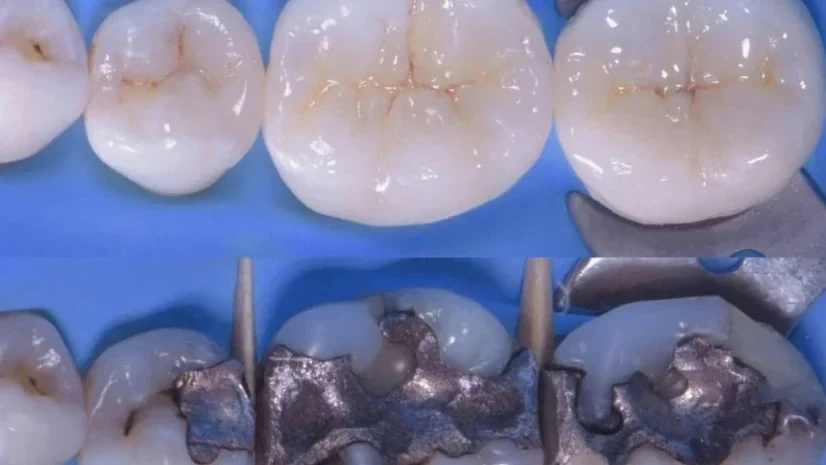
The amount of visible damage is only the starting point
Sometimes a badly broken tooth can still be repaired; a less obvious defect may have a poorer outlook. The assessment checks the sound tissue, root or nerve condition, supporting structures and the final restoration needed. Appearance alone cannot establish whether the tooth can remain useful and practical to maintain. [1]
Ask for the diagnosis behind the prognosis
Decay, trauma, a crack and periodontal breakdown are different problems and may occur together. Ask which finding makes the tooth suitable or unsuitable to retain. For cracks, ESE guidance distinguishes a cracked tooth from a split tooth or vertical root fracture, which can lead to different treatment choices. The word ‘broken’ does not identify the same prognosis in every case. [2]
Infection treatment and structural restoration are related decisions
If endodontic treatment is indicated, ask how it connects to the final restoration and whether the remaining tooth can support that plan. The ESE guideline addresses assessment-led management of pulpal and apical disease. Completing an isolated procedure does not by itself explain the whole prognosis, sequence or maintenance commitment of retaining the tooth. [1]
Compare reasonable retention options with the extraction pathway
Request the proposed stages, likely failure points and what would happen if retention proved unsuccessful. If extraction is recommended, discuss the resulting space and appropriate replacement alternatives. Implant treatment has its own assessment, surgical, restorative and maintenance stages. It should not be presented as an automatically simpler or risk-free improvement on every damaged tooth. [3]
Understand uncertainty before irreversible treatment
Some findings may only become clear after earlier treatment or removal of an existing restoration. Ask what is known, which additional information matters and how a change of plan would be discussed and costed. If a further opinion is reasonable, discuss it before an irreversible elective decision. Keeping uncertainty visible supports consent; it is not a reason to promise that all teeth can be saved.
Urgent infection changes the immediate priority
Seek urgent dental care for worsening swelling or infection symptoms. Emergency warning signs include difficulty breathing, speaking or swallowing, marked mouth swelling or concerning eye symptoms; call 999 or go to A&E in those circumstances. An extended comparison of cosmetic or replacement options should not delay the urgent assessment required for spreading infection. [4]
Further questions to consider before treatment
- A badly damaged tooth needs enough sound structure to support a restoration; ask what can safely be preserved.
- If a crown is proposed for a heavily restored tooth, ask whether a post or core is needed and what each contributes.
- The amount of healthy tooth left above the gum can affect whether a crown is a predictable option.
- A dentist assesses how much root and tooth support remain before recommending a new crown.
Research and guidance
Your next step, when you’re ready
We would be pleased to welcome you for a £30 consultation at your preferred Iconic Smiles practice. Bring your questions, and we can talk through the options that may suit you.
Any additional investigations and their fees will be explained before you decide.