
Repairing your teeth
Cracked Tooth Syndrome: Why Your Tooth Hurts When You Bite
A cracked tooth may cause temperature sensitivity or pain when biting or releasing pressure; some are symptom-free.
Talk through your options for repairing teeth
If you would like to understand how a tooth might be repaired or protected, a £30 consultation offers time to discuss your concerns and what an individual assessment may involve.
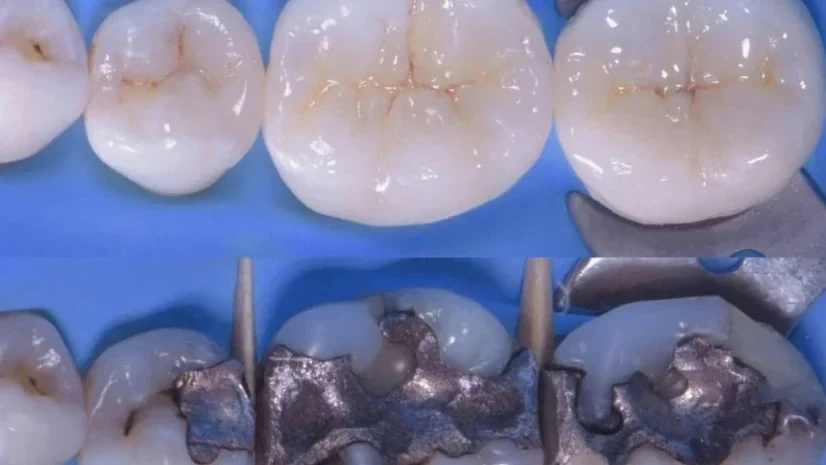
Biting pain can occur with a crack, but does not diagnose one
A crack can cause sensitivity or pain when you bite or release pressure, although some cracked teeth are painless and similar symptoms have other causes. The 2025 European Society of Endodontology statement emphasises assessing the actual crack and findings. Arrange an examination rather than repeatedly testing the tooth with hard food. [1]
The depth and extension matter more than a visible line alone
A superficial enamel line, a cracked tooth, a split tooth and a vertical root fracture are different conditions. Prognosis depends on the location and extent of the defect and its effect on pulp and supporting tissues. A photograph cannot establish all of those features, and the treatment needed should follow the diagnosed condition. [1]
Why an examination may need several kinds of evidence
The ESE statement describes clinical tests and appropriate imaging as part of assessment. Early cracks may not produce an obvious routine radiographic finding. Ask what has been established, what remains uncertain and whether further assessment would change the treatment. A normal-looking image should not be used by itself to dismiss continuing symptoms or confirm that no crack exists. [1]
There is no single restoration for every cracked tooth
Management can include monitoring selected findings, a bonded or cuspal-coverage restoration, endodontic treatment when indicated, or extraction in an unfavourable case. Ask why the recommended option suits the crack and remaining tooth, and whether the pulp needs reassessment before definitive restoration. A protective restoration is not a guarantee that every hidden extension can be controlled. [1]
Separate immediate care from the final prognosis
The plan should explain what the next treatment is intended to achieve, which finding might change the prognosis and what happens if symptoms persist. Ask about the complete restoration and cost, not only an isolated temporary procedure. If uncertainty remains, it should be documented rather than replaced with a promise that all cracked teeth can be saved.
Know when to seek urgent advice
See a dentist for a suspected cracked or broken tooth. Obtain urgent dental assessment for severe or worsening symptoms, swelling or signs of infection. Call 999 or go to A&E if swelling affects breathing, speaking or swallowing or there are other emergency signs such as significant mouth swelling or concerning eye symptoms. Do not wait for a cosmetic-restoration appointment in that situation. [2][3]
Research and guidance
Your next step, when you’re ready
We would be pleased to welcome you for a £30 consultation at your preferred Iconic Smiles practice. Bring your questions, and we can talk through the options that may suit you.
Any additional investigations and their fees will be explained before you decide.