
Super-master guide · Dental implants — replacing missing teeth
Replacing Several Missing Teeth: A Decision Guide to Bridges, Dentures and Implants
Compare complete patterns of tooth replacement, not just one implant versus one bridge.
Explore your tooth replacement options
If you are considering replacing a tooth or several teeth, a £30 consultation gives you a chance to explain what matters most, ask questions and explore the options with our team.
Losing several teeth can affect much more than how a smile looks. You may have started avoiding certain foods, found that speaking feels different, or become used to chewing on one side. Perhaps some teeth are already missing while others have an uncertain prognosis. None of those situations means you must accept one particular replacement. A thoughtful plan begins by understanding which teeth can be preserved, what you need your teeth to do, and which compromises you would rather avoid.
It helps to begin with the wider guide to dental implants, their benefits and limitations before comparing individual options. If you are considering dental implant treatment, the important question is not simply how many implants can be placed. It is whether the proposed combination of natural teeth and replacements will support comfortable eating, cleaning and long-term care.
A related treatment-planning question is explored in Am I Suitable for Dental Implants? A Patient-First Assessment Guide. This related guide addresses a different patient question and can help you compare your options without rushing a decision.
First, map the gaps and the teeth you still have
Two people with three missing teeth can need very different treatment. Three consecutive teeth missing at the back present a different challenge from three separate gaps across the mouth. The health of the neighbouring teeth, how your jaws meet, the shape of the gums and the amount of available bone all matter. Existing bridges or crowns may also change the decision.
Ask for a clear chart showing teeth that are healthy, teeth requiring treatment and teeth with uncertain prospects. Where a tooth might be saved, ask what that would involve and how predictable the result is likely to be. The aim should be to preserve useful natural teeth where appropriate rather than to treat every gap as an automatic reason for extraction.
A complete plan should distinguish immediate priorities, such as pain or active infection, from choices that could safely wait. The guide to choosing between a single implant and a resin-bonded bridge explores a narrower decision; replacing several teeth needs a whole-mouth view.
Option one: a removable partial denture
A partial denture replaces teeth using a removable appliance supported by the gums, remaining teeth or both. It may be a practical way to restore several spaces without implant surgery. It can also provide temporary function while a more complex treatment plan is staged.
The design deserves attention. A well-considered denture should take account of which natural teeth carry support, where the appliance sits against the gums and how it can be removed and cleaned. Some people adapt quickly, while others notice movement, bulk or changes in eating and speech. The dentist should discuss adjustments and the possibility that the fit will change as the mouth changes.
The NHS describes dentures as removable replacements for missing teeth. It is reasonable to compare them with more fixed alternatives without assuming that a removable solution is inferior for every person.
Option two: a bridge supported by natural teeth
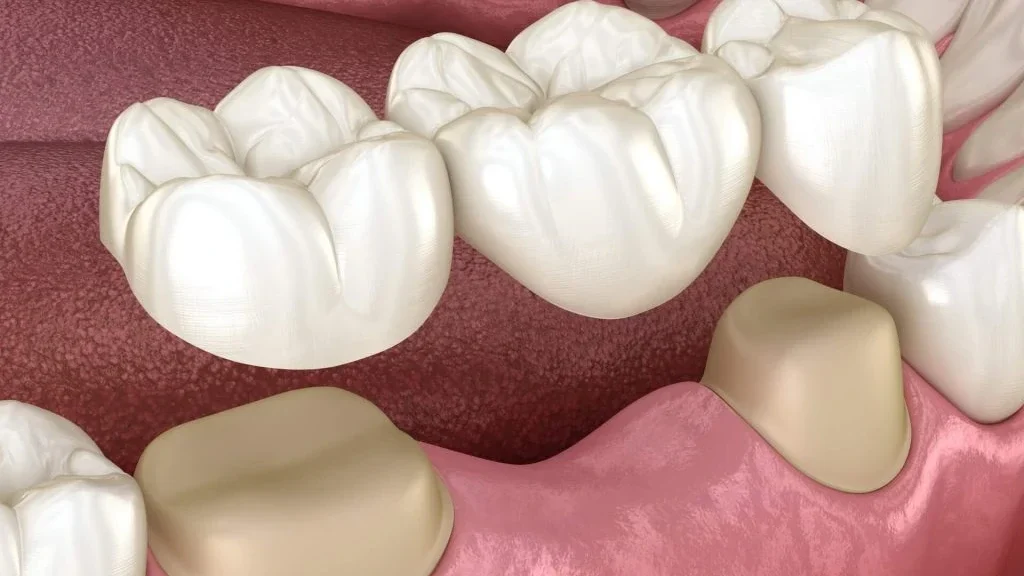
A bridge can replace one or several missing teeth by using adjacent teeth for support. Its suitability depends heavily on the condition, alignment and strength of those supporting teeth, and on the length of the gap. A bridge may be particularly worth discussing where neighbouring teeth already need crowns. Conversely, preparing healthy teeth solely to support a bridge may involve a compromise you would prefer to avoid.
Ask how the space beneath the replacement teeth will be cleaned. A bridge that looks excellent but cannot be cleaned effectively is not a complete long-term solution. You should also understand what might happen if one supporting tooth develops a problem later.
Not all bridges are the same. Resin-bonded designs can be more conservative in selected situations, whereas conventional bridges commonly require more substantial preparation. For a long gap, neither may be suitable.
Option three: implants supporting crowns or a bridge
Dental implants act as artificial tooth roots. Depending on the size and position of the gap, several replacement teeth may be supported by fewer implants than the number of teeth being replaced. This does not mean that using fewer implants is always desirable; the plan must account for load, anatomy, spacing and the type of bridge above them.
An implant route can help avoid preparing neighbouring healthy teeth, but introduces surgery, healing, cost and a lifelong maintenance responsibility. It is not immune to complications. The European Federation of Periodontology explains that untreated gum disease and certain health factors can increase implant risks. A personalised assessment is essential.
If several teeth are already missing and you want a fixed solution, ask what examinations or scans are necessary and why. The team should explain whether bone grafting is a possibility, what provisional teeth you may wear, and how the final design can be accessed for cleaning.
What about replacing every tooth with a full-arch solution?
A complete-arch replacement is a different clinical decision from filling a few gaps. It should not be presented as an easy upgrade when serviceable natural teeth remain. Treatment may involve removing teeth, a period of temporary restoration and a significant ongoing commitment to hygiene and professional care.
A useful question is: What would the plan look like if our priority were to keep as many healthy teeth as safely possible? If two plans differ, ask which findings explain that difference. Understanding the trade-offs matters more than simply comparing the number of implants.
How function changes the choice
Patients often focus first on appearance. Chewing comfort and stability deserve equal weight. A missing back tooth can affect where you feel able to bite; an unstable denture may influence which foods you choose; a bridge can redistribute forces to its supporting teeth. None of these observations automatically dictates one treatment.
Your dentist should check your bite, the condition of remaining back teeth, any signs of tooth grinding and your ability to clean the proposed restoration. If a replacement needs an unusual bite scheme or protective appliance, ask for that to be explained using a model or visual plan.
For teeth that have already undergone extensive repairs, a sequence of stabilisation, conservative care and replacement may be preferable to rushing into the final cosmetic design.
Costs mean more than the first estimate
A meaningful quotation should distinguish examination and investigations, preparation of existing teeth, surgical stages if applicable, provisional restorations, the final teeth and routine maintenance. Ask which items are included and which could become additional costs if a finding changes the plan.
Compare the cost of maintaining the restoration, not only its initial installation. Dentures may need adjustments or replacement. Bridges may need repair or replacement if supporting teeth change. Implant components and restorations can also require professional care and occasional intervention. Exact intervals cannot be promised for an individual patient.
If finances require staged treatment, ask which steps protect health and comfort now and which can be deferred without creating avoidable risk. A temporary solution is not necessarily a failed plan; sometimes it is the most responsible way to proceed.
A sensible decision pathway
A structured appointment can help you leave with clarity rather than a confusing list of procedures.
- Identify and treat pain, infection, decay or active gum disease.
- Agree which natural teeth are worth preserving and which have an uncertain outlook.
- Clarify whether your priorities are fixed teeth, easier cleaning, minimal surgery, budget flexibility or a combination.
- Compare suitable dentures, bridges and implant-supported options, including what each requires from you.
- Consider provisional teeth, recovery, cleaning access, follow-up arrangements and realistic total costs.
- Agree a written plan with alternatives, risks and the circumstances in which it might change.
There is no obligation to decide during the first conversation. A second opinion can be useful when a plan involves multiple extractions or major irreversible changes.
Questions patients often ask
Will a fixed implant bridge feel exactly like natural teeth?
It can provide a stable fixed replacement, but sensation and cleaning are different from natural teeth. Some people need time to adapt. Ask about the shape of the underside, speech, food clearance and access for cleaning.
Is leaving a gap ever reasonable?
Sometimes, particularly when the gap is not causing functional or biological problems. The effect on neighbouring teeth, the bite and your priorities should be assessed rather than assuming every space must be filled.
Can I combine replacement types?
Yes, some plans use a combination of natural teeth, removable appliances and fixed restorations, provided the whole bite and long-term care requirements are considered together.
What if I am frightened of treatment?
Tell the team before any examination. A manageable first visit can focus on listening, explaining options and agreeing the pace of investigation. Ask about the support available rather than feeling pressured to choose surgery.
References and further evidence
- NHS — Dental treatments, including bridges, dentures and implants.
- NHS — Dentures.
- European Federation of Periodontology — Dental implant FAQs.
- NICE CG19 — Individualised dental review intervals.
This guide explains general choices, not a recommendation for any individual mouth. A suitably qualified clinician must review your history, examination findings and available alternatives before treatment is agreed.
Your next step, when you’re ready
We would be pleased to welcome you for a £30 consultation at your preferred Iconic Smiles practice. Bring your questions, and we can talk through the options that may suit you.
Any additional investigations and their fees will be explained before you decide.