
Composite Bonding in Hertfordshire: Everything You Need to Know

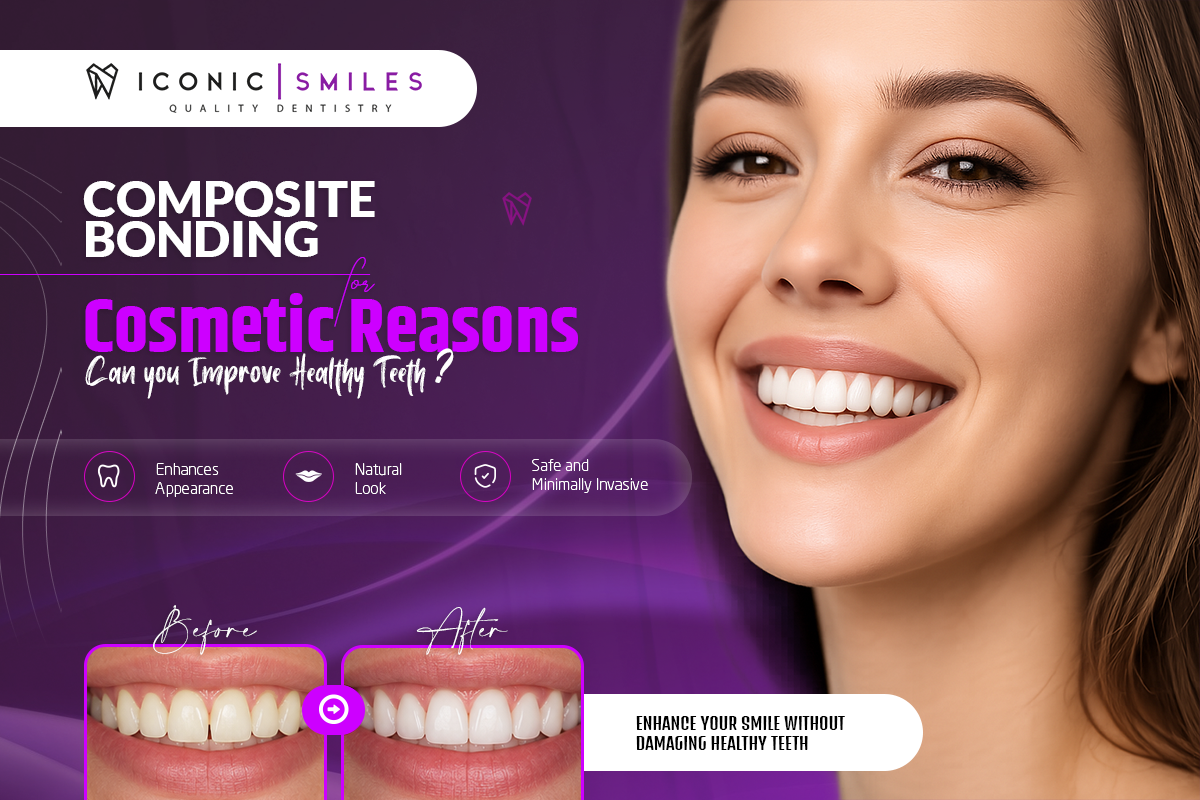
If you’re looking for a fast, minimally invasive way to improve your smile, composite bonding is one of the most popular cosmetic dental treatments available. Whether you have chipped teeth, small gaps, worn edges or uneven tooth shapes, composite bonding can often transform your smile in just one appointment.
Unlike more invasive cosmetic procedures, composite bonding usually requires little or no removal of healthy tooth structure, making it a conservative treatment that preserves your natural teeth while enhancing their appearance.
At Iconic Smiles, we provide composite bonding across Hertfordshire, helping patients achieve natural-looking smile transformations with personalised treatment plans.
In this guide, you’ll learn how composite bonding works, who it’s suitable for, how long it lasts, and how it compares with porcelain veneers.
What Is Composite Bonding?
Composite bonding is a cosmetic dental treatment that uses a tooth-coloured composite resin to improve the appearance of teeth.
The resin is carefully applied to the surface of the tooth, sculpted by hand and hardened using a special curing light. Once polished, it blends naturally with the surrounding enamel to create a seamless finish.
Composite bonding can improve the size, shape and appearance of teeth without the need for extensive drilling or tooth preparation in many cases.
Because treatment is completed directly on the tooth, it can often be finished in a single visit.
How Does Composite Bonding Work?
Composite bonding is a highly technique-sensitive procedure that relies on careful planning and artistic precision.
Your dentist will:
- Select a composite shade that closely matches your natural teeth.
- Prepare the tooth surface using a conditioning gel and bonding agent.
- Apply the composite resin in layers.
- Sculpt the material to create the desired shape.
- Harden each layer using a curing light.
- Polish the restoration to produce a smooth, natural-looking finish.
The result is a tooth that looks healthy, symmetrical and blends naturally with your smile.
What Can Composite Bonding Fix?
Composite bonding is suitable for many common cosmetic concerns, including:
- Chipped teeth
- Small gaps between teeth
- Worn tooth edges
- Uneven or misshapen teeth
- Teeth that appear too short
- Minor surface defects
- Localised staining that is suitable for bonding
- Small fractures or cracks that do not compromise the tooth’s structure
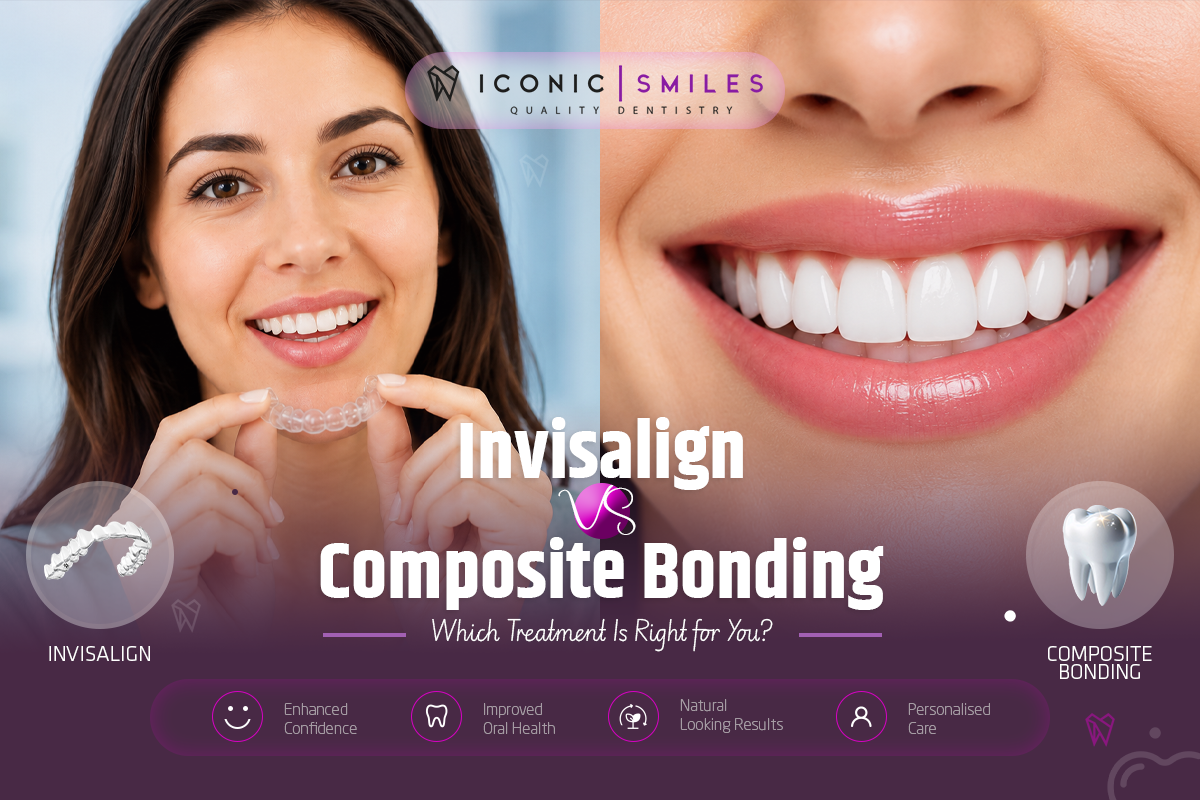
While composite bonding can dramatically improve appearance, it cannot straighten significantly crooked teeth or correct bite problems. In these situations, orthodontic treatment such as Invisalign may be recommended first.
The Composite Bonding Procedure: Step by Step
Understanding the treatment process can help you feel more confident before your appointment.
1. Consultation and Smile Assessment
Your dentist will examine your teeth, gums and bite before discussing your smile goals.
Clinical photographs may be taken, and your dentist will explain whether composite bonding is the most suitable treatment or if another option would provide a better long-term result.
The composite shade is then selected to match your natural teeth as closely as possible.
2. Tooth Preparation
In many cases, little or no drilling is required.
The tooth surface is gently conditioned using a mild phosphoric acid gel, which creates microscopic irregularities that help the bonding material adhere securely.
This stage is usually painless, and local anaesthetic is often unnecessary unless additional treatment is being carried out.
3. Applying and Sculpting the Composite
The dentist applies the composite resin in small layers before carefully shaping it by hand.
Every contour, edge and surface is sculpted to recreate the natural anatomy of the tooth while improving its overall appearance.
Because the material is applied directly to the tooth, small adjustments can be made throughout the procedure to achieve a balanced, natural-looking result.
4. Curing the Composite
Each layer of composite is hardened using a specialised curing light.
The light activates the material, allowing it to set within seconds before the next layer is added.
Layering the composite in this way helps create strength, durability and a lifelike appearance.
5. Finishing and Polishing
Once the final shape has been achieved, the restoration is refined and polished.
The finished composite is smoothed to blend seamlessly with the surrounding teeth, producing a natural shine and comfortable bite.
Composite Bonding vs Porcelain Veneers
Composite bonding and porcelain veneers both improve the appearance of teeth, but they differ significantly in terms of treatment, longevity and cost.
| Feature | Composite Bonding | Porcelain Veneers |
| Treatment | Composite resin applied directly to the tooth | Custom porcelain shell bonded to the front of the tooth |
| Tooth preparation | Usually minimal or none | Usually requires removal of a small amount of enamel |
| Number of appointments | Usually one | Typically two or more |
| Treatment time | 1–3 hours | Around 2–3 weeks |
| Cost | Generally more affordable | Usually higher |
| Repairs | Can often be repaired directly | Damaged veneers usually require replacement |
| Longevity | Typically 4–8 years | Often 10–15 years or longer with good care |
Composite bonding is often the preferred option for patients seeking a conservative, affordable cosmetic improvement.
Porcelain veneers may be recommended where more significant changes to tooth colour, shape or alignment are required.
How Long Does Composite Bonding Last?
Composite bonding typically lasts 4 to 8 years, although some restorations last considerably longer with excellent care.
Longevity depends on several factors, including:
- Your oral hygiene
- Diet
- Smoking
- Teeth grinding or clenching
- Bite forces
- The size and location of the bonding
Unlike porcelain, composite resin may gradually lose its shine or become stained over time. Fortunately, it can usually be polished, repaired or replaced without replacing the entire restoration.
Looking After Composite Bonding
With good oral care, composite bonding can continue looking its best for many years.
To protect your new smile:
- Brush twice daily using a fluoride toothpaste.
- Floss every day.
- Avoid biting fingernails, pens or hard objects such as ice.
- Limit foods and drinks that can stain composite, including coffee, tea, red wine and tobacco.
- Attend regular dental examinations and professional hygiene appointments.
- Wear a night guard if you grind or clench your teeth during sleep.
These simple habits help preserve both your natural teeth and your composite restorations.
Is Composite Bonding Right for You?
Composite bonding is often an excellent choice if your teeth are healthy but you’d like to improve their appearance.
It may be suitable if you have:
- Chipped or worn teeth
- Small gaps
- Minor cosmetic imperfections
- Uneven tooth shapes
- Teeth that appear too short
However, if you have active tooth decay, untreated gum disease, significant bite problems or severely misaligned teeth, these issues should usually be addressed before cosmetic treatment begins.
A comprehensive consultation is the best way to determine whether composite bonding is the right option for your smile.
Why Choose Iconic Smiles for Composite Bonding in Hertfordshire?
Exceptional composite bonding depends on far more than the materials used—it relies on careful planning, clinical expertise and an artistic eye for detail.
At Iconic Smiles, our experienced cosmetic dentists take time to understand your goals before designing a smile that complements your facial features, bite and natural teeth. Every treatment is individually planned using clinical photography and modern digital smile assessment techniques to achieve natural, long-lasting results.
With five clinics across Hertfordshire and North London, we’ve helped thousands of patients improve their smiles through personalised cosmetic dentistry, including composite bonding, Invisalign, dental implants and complete smile makeovers.
If you’re considering composite bonding in Hertfordshire, book a consultation with our friendly team today. We’ll assess your smile, explain all of your treatment options and provide honest advice on whether composite bonding is the right choice for you.