
Can Composite Bonding Close Gaps Between Teeth?

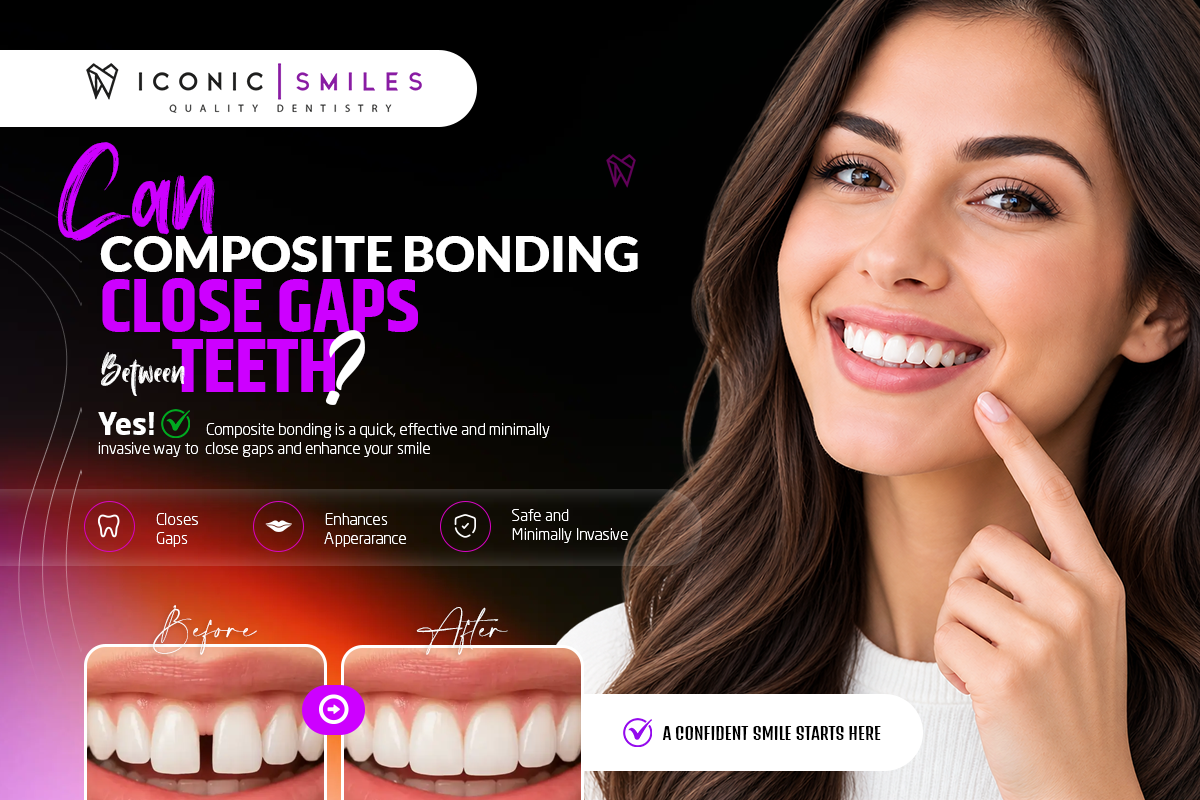
Composite bonding can be used to close or reduce many small gaps between teeth by adding tooth-coloured resin to one or more teeth. Whether it is suitable depends on the size and distribution of the spaces, tooth proportions, gum health and your bite. Larger or more complex spaces may be better treated orthodontically, restoratively, or with a combination of treatments.
For patients who are suitable for treatment, composite bonding can offer a relatively quick and highly conservative way to alter tooth shape without having to move the teeth with braces or clear aligners. In many cases, little or no healthy enamel needs to be removed.
Why Do Small Tooth Gaps Happen?
Gaps between teeth, also known as diastemas, happen for multiple reasons.
These can include:
- Natural differences in tooth size and jaw size. Some people have relatively small teeth, a wider dental arch, or naturally occurring spaces despite having completely healthy teeth.
- Pressure forces or habits such as thumb sucking in childhood or persistent tongue habits can contribute to spacing in some patients.
- Missing or undersized teeth can leave additional space within the dental arch.
- Changes in gum and bone support can sometimes allow teeth to drift apart. A new or increasing gap in an adult should therefore be assessed properly before it is treated cosmetically, particularly where periodontal disease may be contributing to tooth movement.
Can All Gaps Be Fixed with Composite Bonding?
No. Not every gap between the teeth can be resolved by composite bonding.
Smaller spaces are often particularly suitable because composite can be added while maintaining natural-looking tooth proportions. However, there is no single millimetre measurement that determines whether bonding is appropriate.
The dentist needs to consider the size and position of the gap, the width and length of the surrounding teeth, whether there is one space or several, the bite and the overall health of the teeth and gums.
As spaces become larger, simply adding composite can sometimes make the teeth look disproportionately wide. In these cases, orthodontic treatment with fixed braces or clear aligners, alternative restorative treatment, or a combined approach may produce a better result.
A proper clinical assessment is therefore the best starting point. Sometimes the most appropriate advice is not to bond the gap at all.
The Advantages of Choosing Bonding for Selected Gaps
Dental bonding can resolve small gaps between teeth effectively, especially when gaps are even and between front teeth. Dentists add tooth-coloured resin between small gaps, filling gaps and improving symmetry.
Cosmetic bonding for diastema offers multiple advantages:
- Selected cases can often be completed in a single appointment, whereas orthodontic treatment gradually moves teeth over a period of months
- For limited treatment involving one or a few teeth, bonding may cost less than orthodontic treatment, although fees depend on the individual case.
- Composite bonding often requires little or no removal of healthy enamel, and many cases can be completed without local anesthetic.
- It is a conservative and low-commitment treatment because healthy tooth structure can often be preserved.
- Composite resin can be carefully shade-matched and sculpted to blend naturally with the surrounding teeth.
- Unlike some other restorative options, composite can usually be polished, repaired or modified relatively easily in the future if required.
How the Dentist Closes the Gap
The exact technique depends on the teeth being treated, but the process commonly involves the following stages.
-
Consultation and Shade Matching
The dentist examines the teeth and uses a shade guide to select a composite resin that matches the natural colour of your teeth.
The assessment should also consider the bite, gum health, tooth proportions and the distribution of the spaces before treatment begins.
-
Enamel Conditioning and Bonding
The enamel is carefully conditioned, usually using an etching technique, before an adhesive bonding system is applied. This helps the composite resin bond securely to the tooth surface.
For many additive bonding cases, little or no healthy enamel needs to be removed.
-
Building and Sculpting
Composite resin is applied in thin layers to one or both teeth adjacent to the gap, depending on the proportions required.
Dentists carefully mould and smooth the resin to create the required width, contour and symmetry while trying to maintain natural tooth proportions.
-
Light Curing and Polishing
Once the shape is finalised, dentists use a curing light to harden the resin. Afterwards, the composite is trimmed, shaped and polished to reproduce the surface texture and sheen of the surrounding teeth as closely as possible.
Maintaining Your Bonded Smile
Composite bonding can last for many years, but there is no fixed lifespan. Longevity depends on factors including the size and position of the restoration, the bite, grinding or clenching habits, diet, oral hygiene and maintenance.
Composite can also stain, wear or chip over time. One advantage of the material is that it can often be polished, repaired or replaced without having to replace the entire restoration.
To help maintain composite bonding:
– Tea, coffee, red wine and other strongly coloured foods and drinks can contribute to staining over time. Good oral hygiene and professional polishing can help maintain the appearance of the composite.
– Avoid biting directly onto very hard objects such as ice, pens or fingernails with bonded tooth edges.
– Avoid using your teeth as tools.
– Maintain good oral hygiene by brushing twice daily and cleaning between the teeth every day.
– Attend regular dental examinations and hygiene appointments as advised.
– If you grind or clench your teeth, your dentist may recommend additional protection where appropriate.
Why Choose Iconic Smiles to Close Gaps Between Your Teeth?
At Iconic Smiles, we take time to undertake your clinical assessment, which includes bite analysis, gum health evaluation, tooth proportion measurements, and digital imaging or mock-ups where appropriate.
We look not only at whether a gap can be closed, but whether closing it with composite will produce the right tooth proportions, function and long-term result.
In some patients, bonding is an excellent solution. In others, orthodontics, a combined align-bleach-bond approach, another restorative option or even no treatment may be more appropriate.
Our role is to explain those options clearly so that you can make an informed decision rather than simply recommending composite because a gap is present.
If you are considering composite bonding for gaps between your teeth, book a consultation with Iconic Smiles to find out which options are appropriate for your smile.